
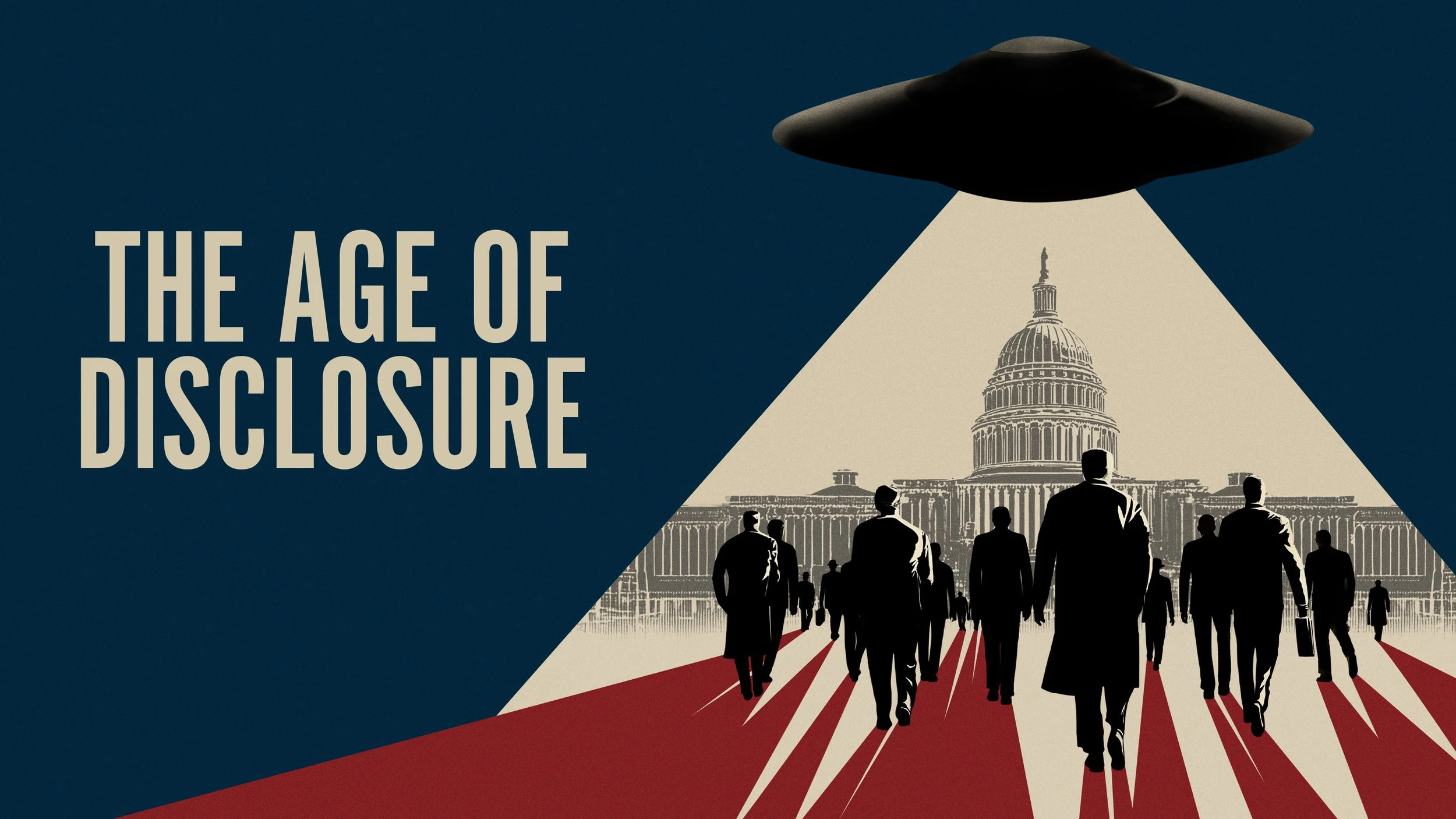
Rubio Documentary Appearance Fuels Talk of Imminent U.S. Disclosure on UAP
Leading figures from both Democrats and Republicans have supported greater transparency, including Senate leaders, intelligence committee members and defence-focussed legislators. In a Capitol riven by factionalism, the degree of alignment on this subject has been striking.
Age of Disclosure is out now on Amazon
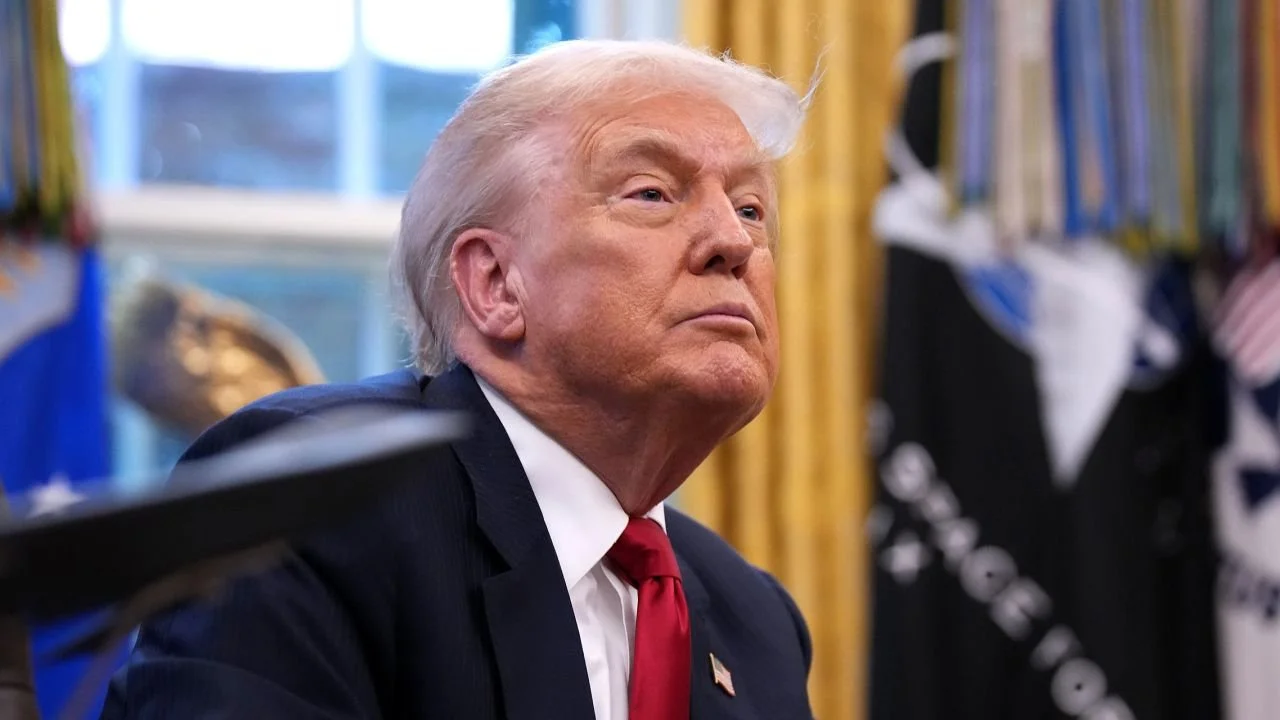
The appearance of the United States Secretary of State in a documentary examining unidentified aerial phenomena has been widely interpreted in Washington as a turning point in the government’s long-standing silence on the issue.
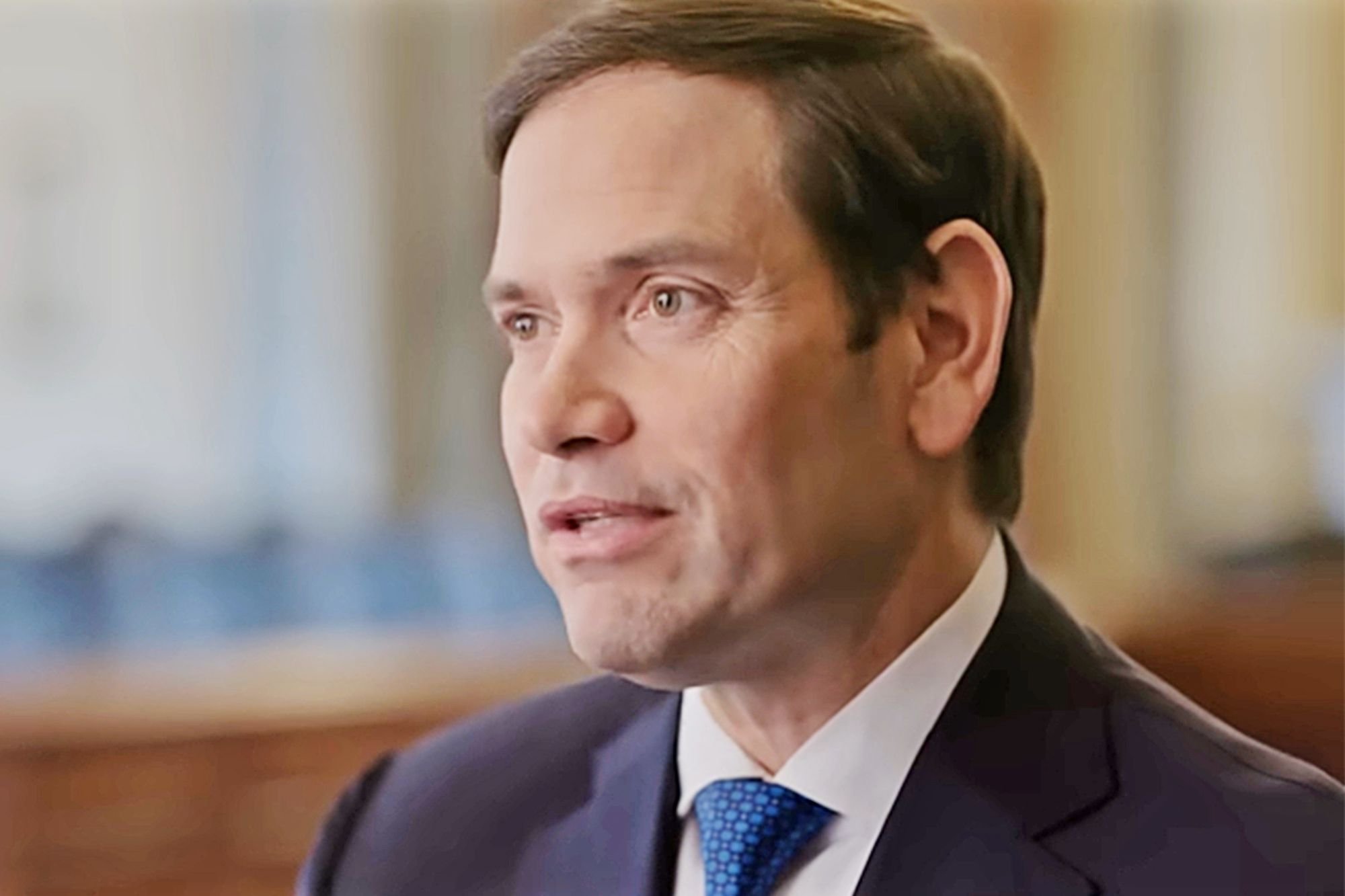
Marco Rubio’s participation in The Age of Disclosure marks the first time a serving holder of America’s highest diplomatic office has associated himself publicly with a film devoted to unexplained incursions into restricted airspace. In political circles, the move is being read not as incidental, but as deliberate.
For decades, reports of unidentified craft were dismissed by officials and relegated to the margins of public debate. That position is now unsustainable. Over the last four years, the Pentagon has confirmed the authenticity of military footage, Congressional oversight has intensified, and sworn testimony has placed the subject squarely within the national security framework.
Rubio’s appearance has now lifted the matter beyond defence departments and into the highest sphere of government.
From Ridicule to Record
The shift did not occur overnight.
In 2020, the Department of Defense acknowledged the authenticity of cockpit footage showing American fighter pilots tracking objects whose behaviour could not be readily explained. Two years later, Congress began holding formal hearings on the subject, bringing serving and former personnel into the open for the first time.
The most dramatic testimony came in July 2023, when a former intelligence officer told Congress that he had been briefed on classified programmes involved in the retrieval and study of technology described as “non-human in origin”. Though those claims remain unproven, their significance lay not in verification, but in venue: the United States Congress.
From that point onward, UAP ceased to be a curiosity and became an institutional concern.
A Calculated Signal
Senior Cabinet officials do not lend their names casually.
Public appearances by secretaries of state are ordinarily scrutinised by communications advisers and national security officials. It is therefore assumed within diplomatic circles that Rubio’s participation was neither spontaneous nor unauthorised.
One former press adviser said: “If the administration wished distance from the subject, this would not have happened. Silence here is not accidental.”
Rubio’s comments in the documentary avoid direct claims of extraterrestrial origin. However, the implication is unavoidable. The subject is no longer being approached as a matter for ridicule or dismissal. It is being presented as unresolved — and taken seriously at the highest level.
Bipartisan Agreement
Unlike most issues in Washington, UAP disclosure has generated rare unity across party lines.
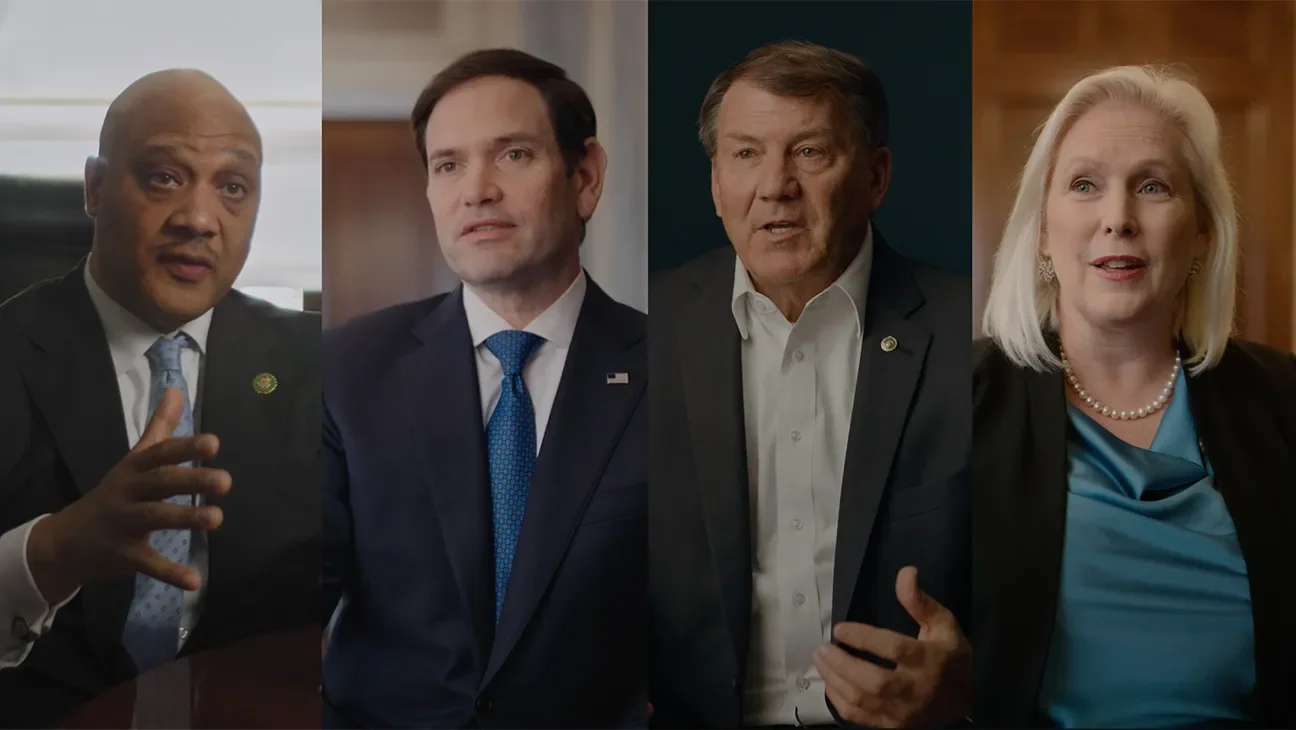
Leading figures from both Democrats and Republicans have supported greater transparency, including Senate leaders, intelligence committee members and defence-focussed legislators. In a Capitol riven by factionalism, the degree of alignment on this subject has been striking.
In 2023, that consensus produced the UAP Disclosure Act, an ambitious legislative attempt to compel the release of historic material and grant legal protection to whistleblowers. While the bill was ultimately diluted before passage, its introduction represented the first serious attempt to codify disclosure into federal law.
It was, in effect, Congress placing itself on record as anticipating further revelations.
Official Silence
The White House has made no statement regarding Rubio’s participation.
Neither the State Department nor the National Security Council has clarified whether his words reflect policy or personal assessment. There has been no correction, denial or distancing.
In Washington, such silence is seldom meaningless.
When officials wish to contain damage, they act swiftly. When statements exceed authority, they are amended. Rubio’s has been neither corrected nor contextualised.
A Process, Not a Moment
Few in government expect a dramatic announcement or a single disclosure event.
History suggests that major revelations emerge by degrees — through incremental acknowledgement and quiet repositioning rather than spectacle. The appearance of a Secretary of State in a public documentary may therefore be less a declaration than a signal.
A senior defence analyst described it as “normalising the unimaginable”.
The Question Now Being Asked
For generations, the question of unidentified craft hovered at the edges of serious discourse.
It no longer does.
With Congressional hearings on the record, defence departments engaged, legislation introduced — and now the United States’ chief diplomat addressing the matter publicly — the debate has moved irrevocably into the political mainstream.
In diplomatic circles and editorial rooms alike, one question now dominates:
Is the White House preparing to make a formal statement?
By Digby R Furneaux
The Documentary Method: Why Businesses Need to Stop Acting and Start Telling the Truth
Why documentary-style business video builds trust, creates stronger human connection and delivers more lasting value than scripted content.
The Documentary Method - Digby Furneaux
I spend a great deal of my life behind a camera. Sometimes I'm filming interviews for a documentary, sometimes I'm shooting promotional films for businesses, and sometimes I'm simply observing people. The funny thing is that after years of doing this, I've come to the conclusion that people are at their most interesting when they forget they're being filmed.
It's a strange contradiction because most businesses approach video in exactly the opposite way. They prepare scripts, rehearse lines and try to become a polished version of themselves. They spend hours worrying about what to say and how to say it. They watch videos from marketing gurus who tell them they need a stronger hook, more energy, quicker edits and captions that bounce around the screen to keep people's attention.
And I understand why they do it.
We're all swimming in the same sea of advice. Every day we're told that attention spans are shrinking and that if we don't grab somebody in the first two seconds we've lost them forever. We are taught to chase views, optimise retention and study algorithms as though they are some mysterious force controlling our success.
Yet I can't help but wonder whether we're chasing the wrong thing.
A few evenings ago I found myself scrolling through social media and realised I couldn't remember a single video I'd watched in the previous half hour. I'd seen plenty of them. In fact, I'd probably watched dozens. They were expertly edited, packed with music and transitions and designed with surgical precision to keep me engaged.
But none of them stayed with me.
Then I thought about the videos I do remember.
I remember a documentary where a man paused for what felt like an eternity before talking about losing his wife. Nothing happened in that pause. There was no music swelling in the background and no dramatic zoom. He simply sat there trying to find the words. Yet I remember that moment years later because it was honest.
I remember interviews where people forgot they were supposed to be performing and started talking like human beings. I remember awkward laughs, unfinished sentences and moments of vulnerability that no scriptwriter in the world could have invented.
Those moments are powerful because they reveal something real.
And the more I think about it, the more I believe that's what audiences are actually searching for.
Not perfection.
Not clever editing.
Not another person pointing at text on a screen.
People are searching for connection.
This matters enormously for businesses because businesses are built on trust, and trust is built when people feel they know you. It's why we return to the same coffee shop, recommend the same tradesman or choose one company over another even when the products are almost identical.
We buy from people.
And yet so much business video seems designed to hide the people behind the business.
It replaces personality with polish. It smooths out imperfections and edits away the pauses. It creates a carefully manufactured version of somebody because we assume that's what audiences want to see.
I'm no longer convinced that's true.
In fact, I think the opposite might be true.
I think people are becoming increasingly good at spotting when they're being marketed to. We can all sense when somebody is reading from a script or following a trend they've seen online. We might watch for a moment, but we rarely connect.
Connection comes from authenticity, and authenticity is difficult to fake.
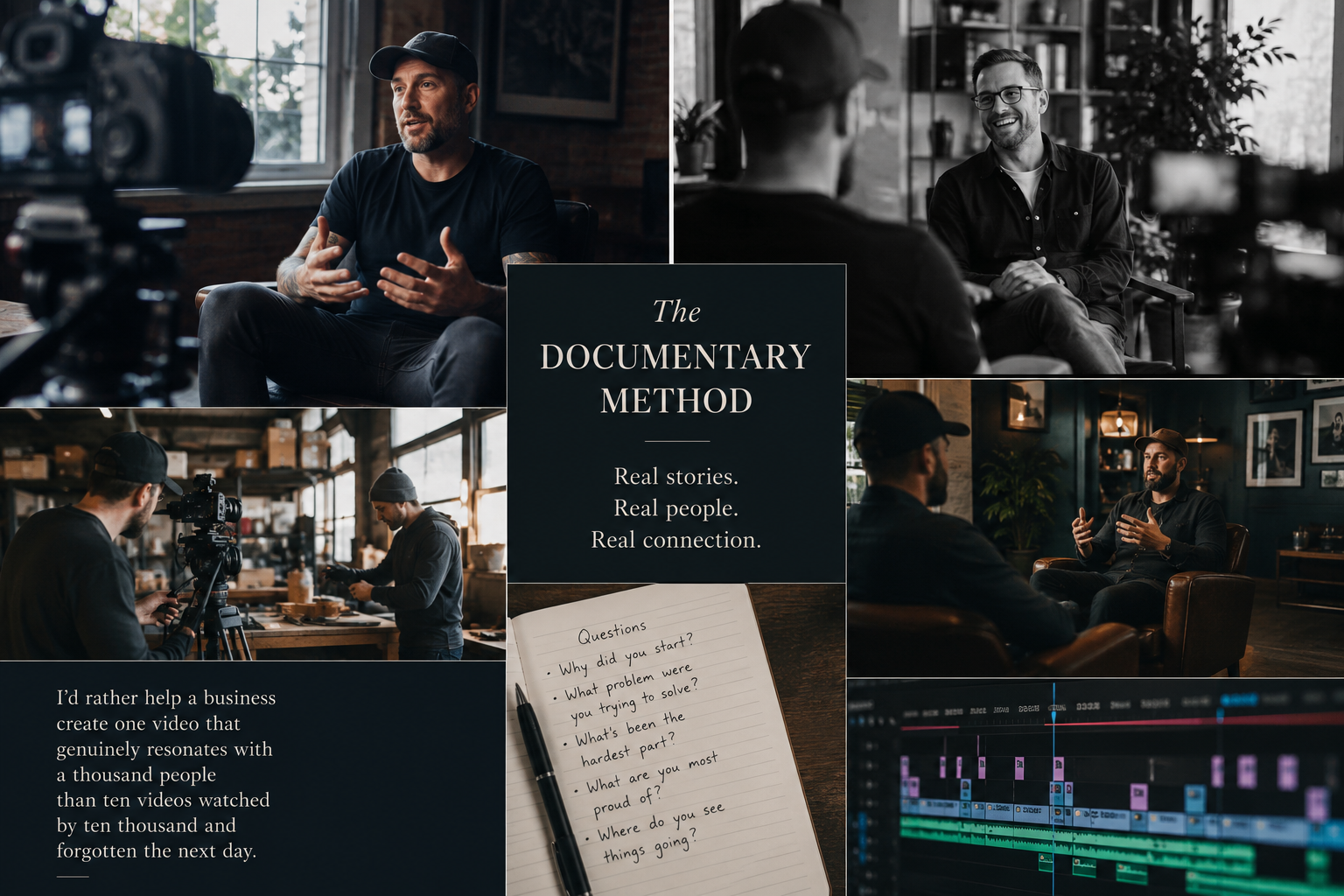
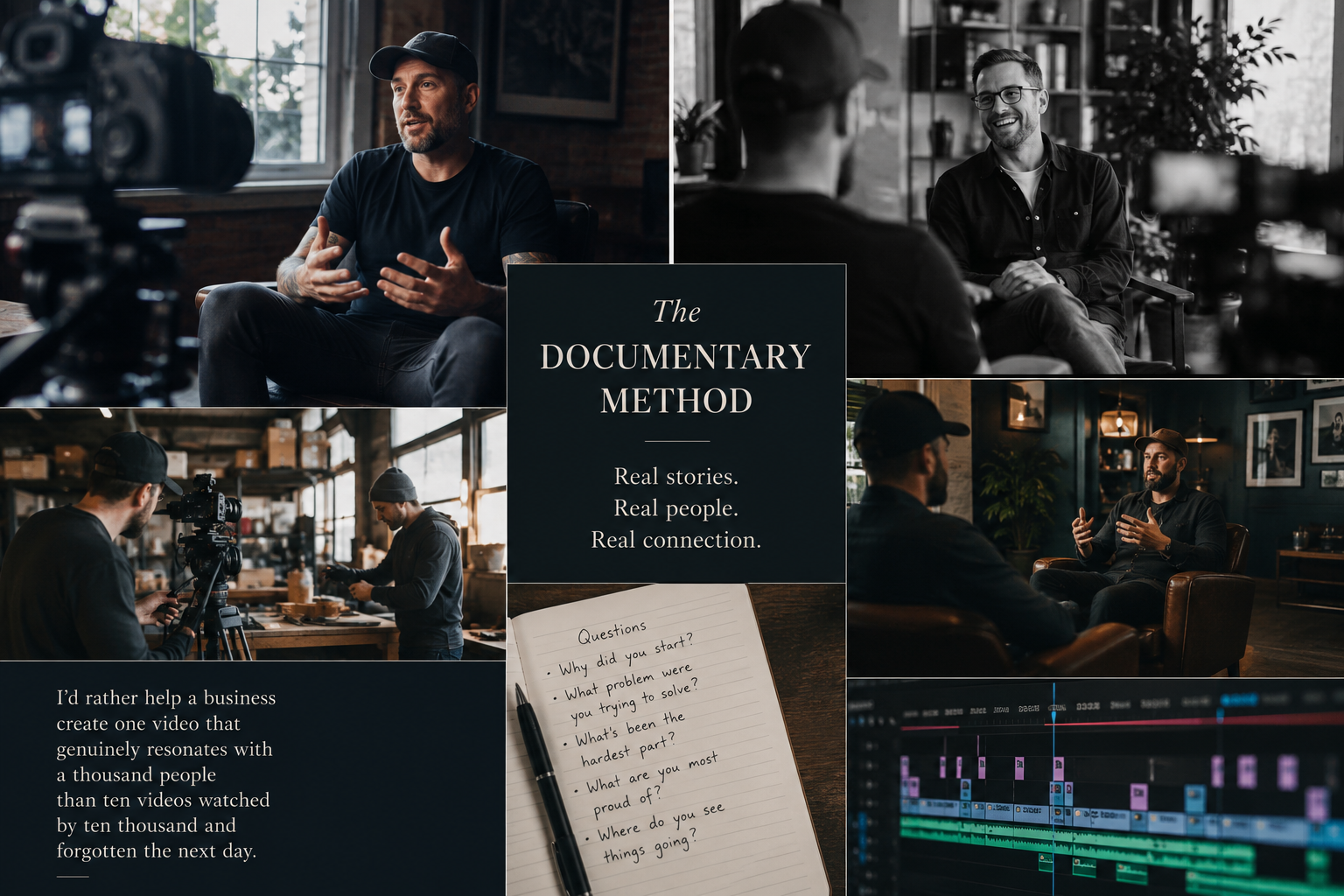
That's why I've started approaching business video in a completely different way, something I call The Documentary Method.
The premise is surprisingly simple. Instead of arriving with a script, I arrive with questions. Instead of telling people what to say, I ask them why they started their business. I ask what frustrates them about their industry, what keeps them awake at night and what makes them proud.
At first, people are nervous. Most of us aren't used to speaking openly on camera. We think we need to perform.
But something interesting happens after ten or fifteen minutes.
People relax.
They stop searching for the perfect answer.
They forget the camera is there.
And suddenly they're telling stories.
They're talking about the customer who changed their perspective on their business. They're explaining why they took a risk when everyone told them not to. They're laughing about mistakes they made in the early days or becoming emotional when they describe what success really means to them.
Those are the moments I look for.
Because those are the moments an audience connects with.
The beauty of this approach is that it isn't just more authentic, it's also incredibly practical. One long-form interview can become an entire library of content. A single conversation can provide a brand film, a series of short videos for social media, clips for a website and enough material to tell the story of a business in a way that feels genuine rather than manufactured.
More importantly, it allows people to see the real person behind the company.
And I think that's becoming increasingly valuable.
We've spent years optimising content for algorithms and chasing ever larger view counts. But views, on their own, don't build businesses. I've seen videos with hundreds of thousands of views leave no impression whatsoever, while a simple, honest conversation watched by a few thousand people creates genuine trust and lasting relationships.
I'd take the latter every single time.
Because a thousand people who truly understand who you are and what you stand for are infinitely more valuable than ten thousand people who barely remember watching your video.
Perhaps that's an old-fashioned view.
Or perhaps, in a world saturated with noise and performance, telling the truth has become a radical act.
I don't know if The Documentary Method will become the next marketing trend, and to be honest I'm not particularly interested in whether it does.
What I do know is this: when people stop acting and start telling the truth, audiences notice.
And in the end, I think that's what great filmmaking—and great business—is really about.